
Risotto alla Milanese
 Leo Hartmann Demo
- Makes
- 12 servings
- Active
- 37 min
- Total
- 50 min
You’ll Need wide heavy saucepan or risotto pan, saucepan for the broth, ladle, wooden spoon, mortar and pestle
Method
Saffron Infusion
-
Grind the to a powder in a mortar, then pour over the and leave it to infuse for at least , longer if you can. Saffron powder only needs stirring in to dissolve.
the liquid is a deep orange-goldSafe to pause here[object Object]
Risotto
-
Bring the to a gentle simmer in a saucepan and keep it there, next to the risotto pan.
-
Melt the in a wide, heavy pan over low heat. Add the and and cook very gently, stirring now and then.
the marrow has melted completelyonion is soft and translucent with no colour[object Object]
-
Raise the heat to medium, add the and stir it in the fat until every grain is coated and hot.
grains turn chalky white and feel hot to the touchneither the rice nor the onion browns[object Object]
-
Pour in the and stir until it has evaporated.
no smell of alcohol remains[object Object]
-
Add a ladle of hot broth and stir gently until it is almost absorbed, then add the next. Keep going a ladle at a time, at a lively simmer.
the rice always looks just covered by a thin, creamy layer of liquid[object Object]
-
About halfway through, pour in the saffron with all its liquid and keep cooking as before. For a stronger saffron flavour, add it in the last instead.
the risotto turns an even, deep gold -
Taste the rice: it is ready when tender but with a slight firmness at the centre. Season with if the broth needs it.
al dente, the risotto still loose and a little brothy -
Turn off the heat. Add the and the and beat vigorously with a wooden spoon for a minute or two.
butter and cheese have melted inthe risotto is creamy and flows in a slow wave when you shake the pan[object Object]
-
Spoon onto warm plates straight away and pass extra at the table.
From Leo Hartmann
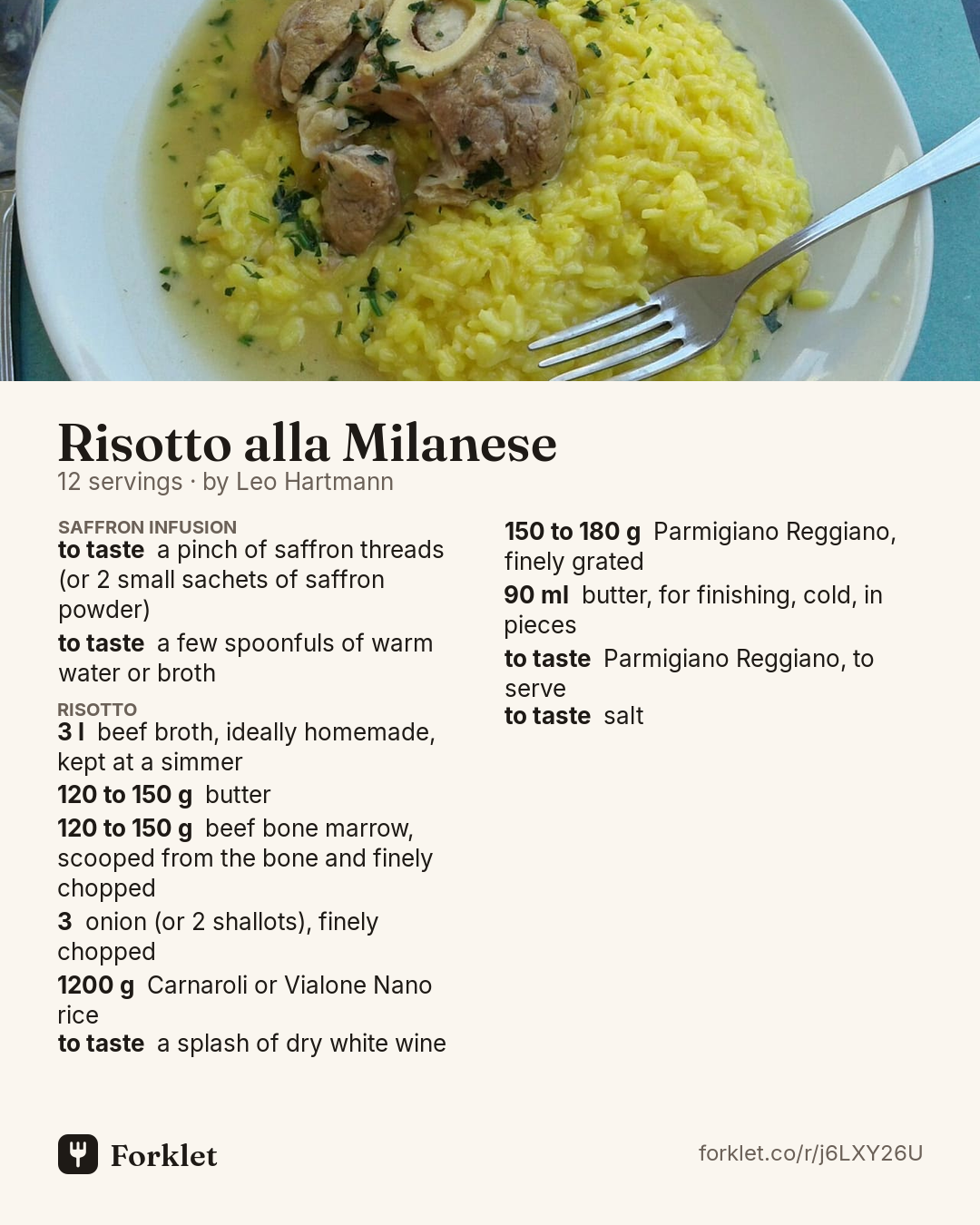
Most people know this risotto for its saffron, but the traditional version also melts beef marrow into the soffritto, which gives a quiet, savoury depth and a silky finish. Ground saffron is steeped first so its colour and perfume spread evenly, and the risotto is served loose, all'onda, the way the Milanese like it.
Notes
- Marrow. Ask the butcher for marrow bones split lengthways. Simmer them for a minute or two, or roast at 200 C for 5 to 10 minutes, and the marrow will scoop or slide out. Without marrow, add extra butter at the end; strictly speaking you then have risotto allo zafferano.
- Broth. Homemade beef broth is traditional. A mixed beef and chicken broth is lighter and gives a brighter yellow; vegetable broth or even lightly salted water also work. Keep it at a simmer next to the rice.
- Rice. Carnaroli is the classic choice; Vialone Nano is excellent too, and Arborio works if that is what you have.
- Saffron. Grind threads in a mortar before soaking; the longer they steep (even a few hours) the better. Powder needs only dissolving. Add it halfway through for a mellow flavour or in the last 5 minutes for a stronger one.
- Texture. Stop while the rice is still a little brothy: it tightens as you beat in the butter and cheese. For a firmer risotto, let it stand covered for a minute or two.
- With ossobuco this is the traditional partner, served on the same plate as a single course.
Storage
Risotto is best eaten straight away. Leftovers keep 2 days in the fridge and are perfect for arancini or a crisp risotto al salto pancake.
Make Ahead
Start the saffron infusion hours ahead, and scoop and chop the marrow earlier in the day. The broth can be made days ahead or frozen.
When to Start
Plan backwards from a time
Filed under Main · Southern Europe › Italy › Lombardy · Rice · Risotto · Risotto. Tags: #milanese classic, #saffron.