
Pad Thai
 Leo Hartmann Demo
- Makes
- 1 serving
- Active
- 14 min
- Total
- 1 h 30 min
You’ll Need Wok or large nonstick skillet, Small saucepan, Kitchen scissors
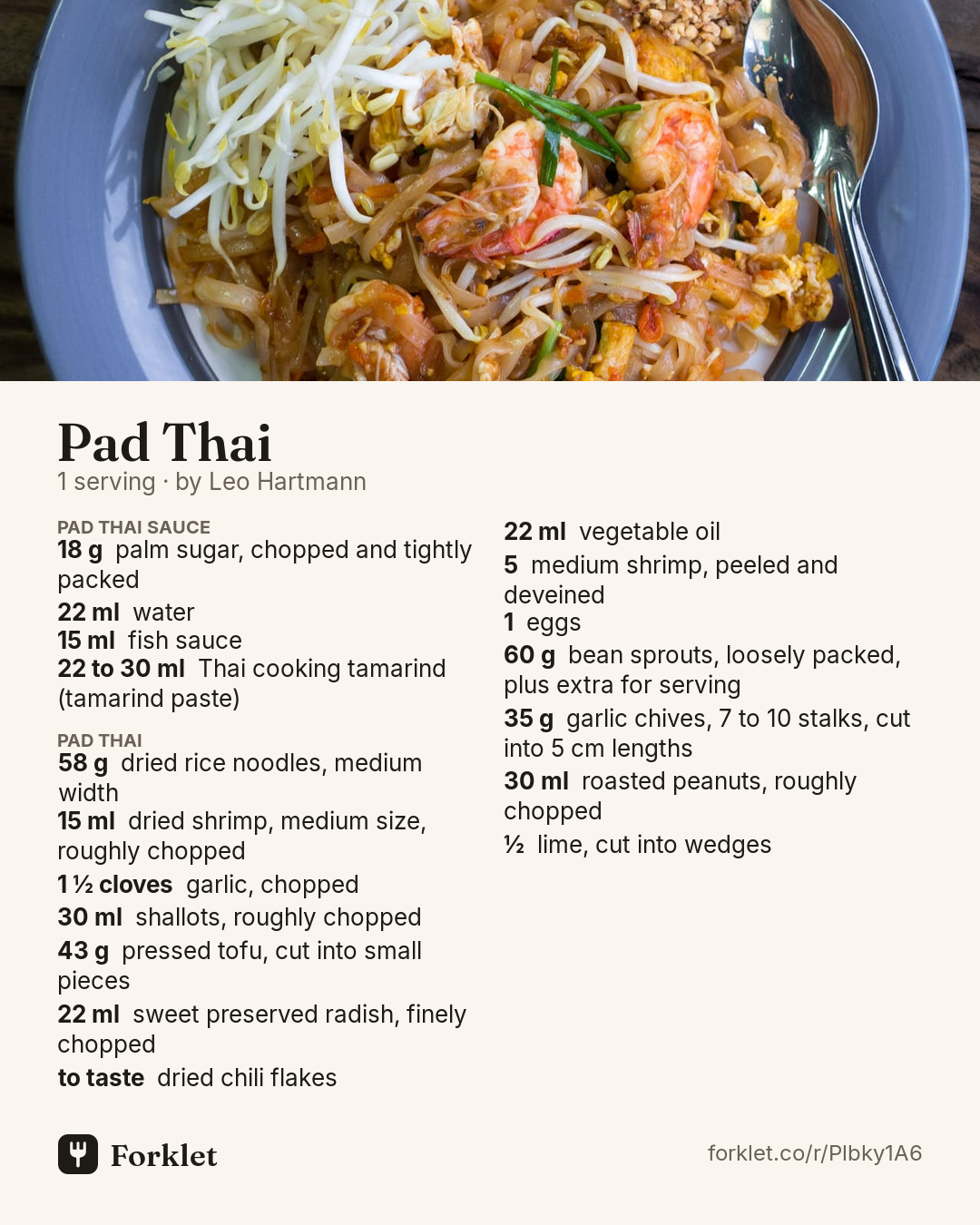
Method
Pad Thai Sauce
-
Melt in a small pot over medium heat, then keep stirring until it darkens a shade.
light amber caramelsmells toasty -
Immediately add , and . The caramel will seize into lumps; that is fine.
-
Bring to a simmer, turn off the heat and leave it while you prep everything else, so the hardened sugar dissolves. Make sure it has fully melted before you cook.
smooth, with no sugar lumps on the spoonSafe to pause here[object Object]
Pad Thai
-
Soak in room temperature water until soft and pliable but still firm at the centre, then drain.
the noodles bend easily but are still white and firm in the middle[object Object]
-
Snip the drained noodles once with scissors so they are half as long and easier to toss.
-
In a bowl, combine , , , , and .
-
Heat the wok over high heat with enough of to coat the bottom. Sear until just cooked, then take them out.
pink and just curled -
Turn the heat to medium, add a little more oil and tip in the tofu mixture. Sauté until the garlic starts to turn golden and the shallots wilt, adding oil if the wok looks dry.
garlic just golden -
Turn the heat to high, add the noodles and all of the the pad thai sauce and toss constantly until the sauce is absorbed.
no liquid left pooling in the wok -
Taste a noodle. If it is still hard at the centre, add a splash of water and keep tossing until tender, adding only a little at a time.
chewy but cooked through -
Push the noodles to one side, add a little more oil to the empty space and crack in . Break the yolks, lay the noodles over the eggs and leave for about , then flip and toss to mix the egg through.
-
Return the shrimp and their juices, add , and half the . Turn off the heat and toss until well mixed.
sprouts still crunchy, chives just wilted -
Serve right away topped with the rest of the peanuts and , with extra bean sprouts, chives and chili flakes on the side. Squeeze the lime over before eating.
From Leo Hartmann
The sauce starts by caramelising palm sugar before the tamarind and fish sauce go in, which gives it a deeper, rounder sweetness than simply stirring everything together. The noodles are soaked in room temperature water instead of boiled, so they finish cooking in the wok as they soak up the sauce and stay chewy rather than mushy.
Notes
- Tamarind: buy Thai cooking tamarind, a brown pourable liquid made in Thailand, not the dark Indian concentrate. Sourness varies widely by brand, so taste it and start with 3 tablespoons.
- Preserved radish: look for the sweet kind (chai po), sold chopped in Thai and Chinese grocers. The salty kind is not a substitute.
- Make one batch at a time. Two servings is the most a home wok handles well; for more people, repeat rather than doubling.
- Protein: chicken, pork or more tofu can stand in for the shrimp; cook it first and take it out, as below.
- Do not skimp on oil, or the noodles clump and stick.
Storage
Best eaten straight from the wok. Leftovers keep a day in the fridge; reheat in a hot pan with a splash of water.
Make Ahead
The sauce keeps a week in the fridge. Soak the noodles and prep everything else before you start cooking: the stir-fry takes about 10 minutes.
When to Start
Plan backwards from a time
Filed under Main · Southeast Asia › Thailand · Seafood · Noodles · Stir Frying · Pad Thai. Tags: #quick, #street food.