

Method
Dough
-
Mix and in a large bowl and make a well. Pour in and and stir with a spoon, drawing in the flour, until you have a shaggy mass.
-
Knead on a well floured surface for , adding flour if it gets sticky.
smooth and elastic, springing straight back when poked -
Cover with a damp towel and rest .
Safe to pause here
Filling
-
Pulse , and in a food processor until finely chopped.
-
Put and in a large bowl with the onion and herbs, , and . Knead with your hand until evenly mixed.
-
Work in a little at a time, kneading well after each addition until it is absorbed. Leave the filling to stand .
loose and wet but holding together, with no pool of water in the bowl
Pleating and Cooking
-
Cut the dough in two, keeping one half covered. Roll the other into a large round about 6 mm (¼ in) thick; leave it on the thick side, since each piece is rolled again.
-
Stamp out rounds with a 8 cm (3 ⅛ in) to 9 cm (3 ½ in) glass, and add the scraps to the covered dough. Roll each round out to 11 cm (4 ⅓ in) to 14 cm (5 ½ in) across.
thinner in the middle than at the very edge is fine -
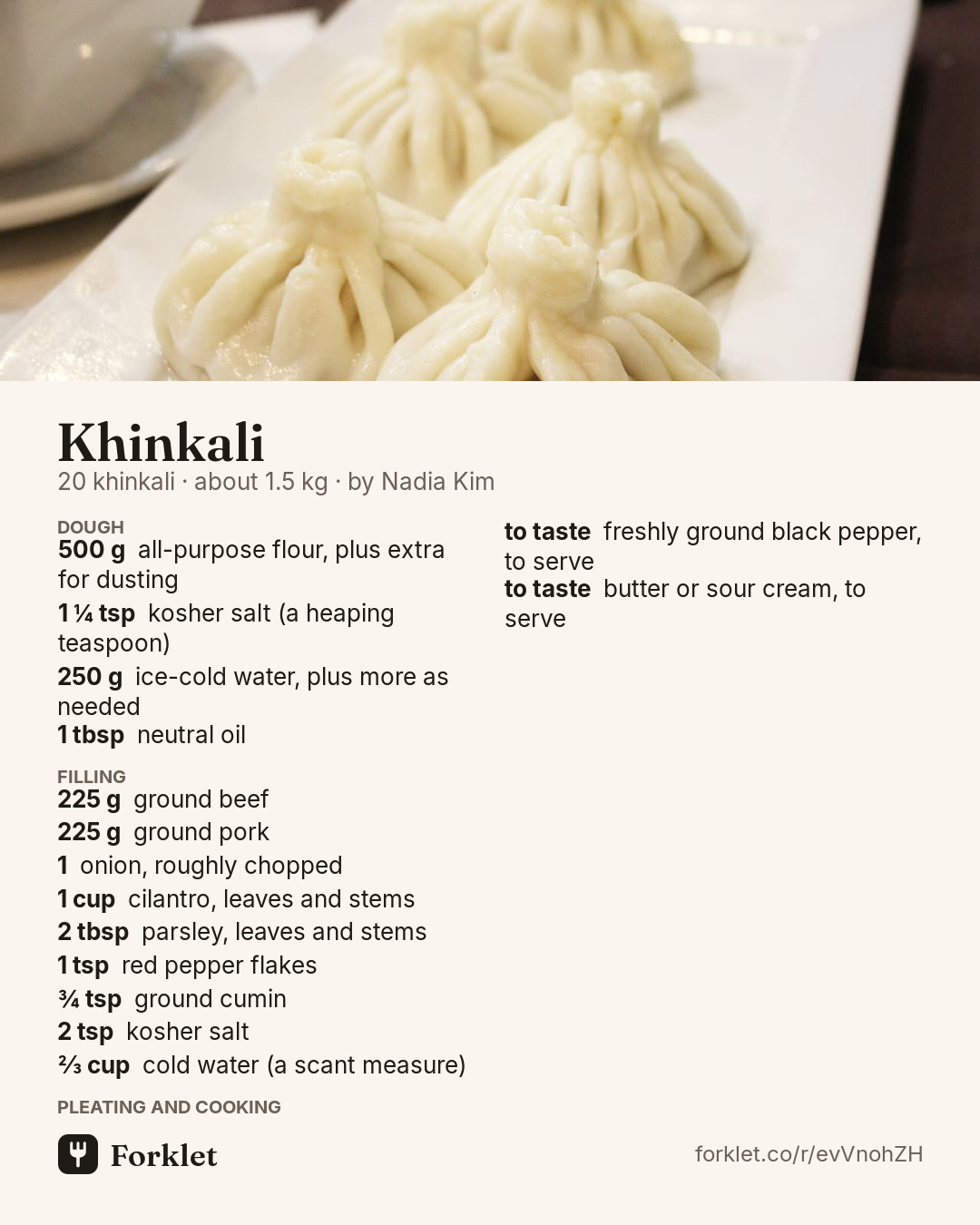
Put a generous spoonful of filling in the centre of a round. Bring one edge up over the filling and, working clockwise, keep folding the dough into overlapping pleats until the filling is completely enclosed.
about nineteen pleats meeting at the top -
Pinch the neck hard and twist the pleats while turning the dumpling the other way, tugging the knot up slightly to leave a little space above the filling. Keep the finished khinkali under a damp cloth. Repeat with the rest to make about 20.
no gaps at the top where juice could escapeFreeze any you will not cook today. -
Bring to a boil with . Lower in about ten khinkali, topknots down, and shake the pot so they do not stick; then leave them alone. Once the water returns to the boil, cook .
100 °Cthe dumplings float and look taut and full -
Lift out with a slotted spoon, grind plenty of over them and serve at once, with if you like, while the next batch cooks.
From Nadia Kim
The secret to khinkali is the water worked into the raw filling: it soaks up the fat and spices as the dumplings boil and turns into the hot broth you slurp from the first bite. The dough is kneaded long and left a little thick before the final roll, so it can carry a heavy, wet filling without tearing. Aim for nineteen pleats, but a tight seal matters more than the count.
Notes
- How to eat them: pick each one up by its topknot, bite a small hole in the side and drink the broth before eating the rest. Never cut them with a knife and fork. Leave the topknot (kudi) on the plate; it is how you keep count.
- Pleating: bring one edge up to the centre and keep folding the dough over itself clockwise, each fold overlapping the last, until the filling is enclosed. Pinch the neck firmly and give it a twist, pulling the knot up slightly so there is a little room above the filling for the broth.
- Meat: in the mountains khinkali are made with lamb; in towns, beef and pork are usual. Ground meat that is not too lean gives the best broth.
- Yield: the number depends on the size of your rounds; this batch makes about twenty large dumplings.
- Serve straight from the pot with plenty of freshly ground black pepper. A pat of butter or a spoon of sour cream is not traditional everywhere but is very good.
Storage
Leftover cooked khinkali keep 2 days in the fridge; fry them in butter until crisp the next day.
Make Ahead
Freeze uncooked khinkali on a floured tray, then bag them. Cook from frozen for about 15 minutes.
When to Start
Plan backwards from a time
Filed under Main · Caucasus › Georgia · Beef · Dumplings · Pasta Making · Khinkali. Tags: #freezer friendly, #supra, #weekend project.


Cooked It?
Sign in to say you cooked it.
Questions
No answered questions yet.
Sign in to ask the author a question or suggest a fix.